


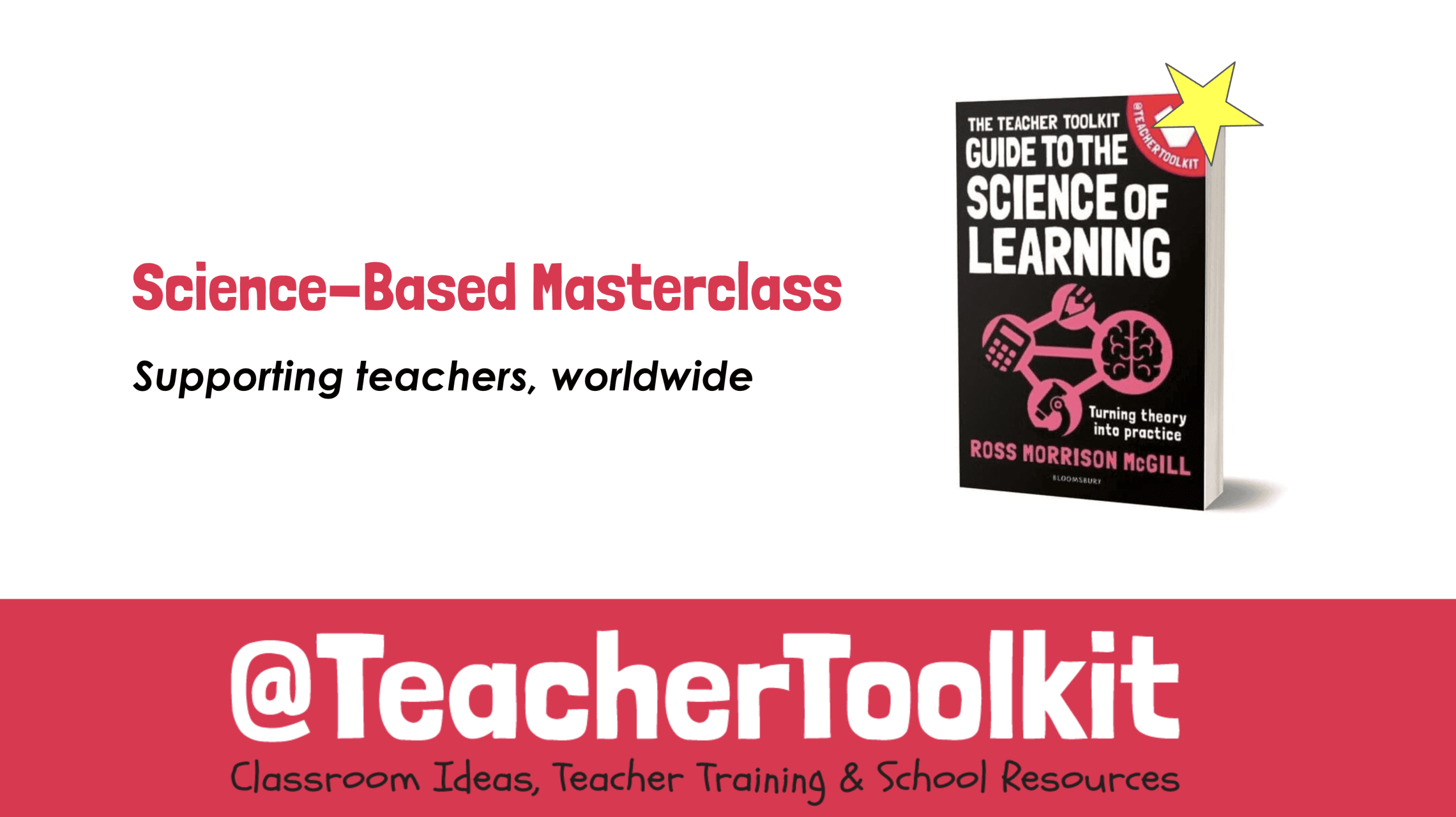
Science-Based Teaching Masterclass
£49.99
This practical masterclass helps teachers, schools, and college leaders understand what science-based teaching looks like in real classrooms. Drawing on The Teacher Toolkit Guide to the Science of Learning, the webinar explores attention, working memory, cognitive load, prior knowledge, neuromyths and the cautious use of MRI and fMRI research in education. This download includes a 13-minute on-demand webinar, a 26-slide CPD presentation and practical supporting resource pack with explanations of attention and working memory, guidance on cognitive overload and prior knowledge and an introduction to MRI and fMRI research. This resource is:
- Ideal for classroom teachers working in EYFS through to FE.
- Perfect for teaching and learning leaders
- Great for CPD leaders who want practical ideas to share for whole-school training
- This resource supports cognitive science, classroom practice and evidence-informed CPD.
- Save when you purchase the full CPD subscription series / or top membership option.
You may also like…

Description
Attention, working memory and cognitive load
Students cannot process everything they see and hear. Information must first attract attention before it has a chance of entering working memory. When lessons contain excessive information, competing stimuli or unclear instructions, students may struggle to identify what matters. This does not necessarily indicate low motivation or poor behaviour. It may reflect cognitive overload.
The resource helps teachers consider how to:
- reduce unnecessary information
- sequence explanations carefully
- connect new material to prior knowledge
- use clear models and worked examples
- pause between instructions
- check what students have processed
- adapt teaching without lowering expectations
What can MRI and fMRI tell teachers?
MRI produces detailed images of brain anatomy. fMRI estimates changes associated with neural activity by measuring alterations in blood oxygenation.
These methods can deepen understanding of attention, memory and cognition. However, they do not show learning directly and cannot identify one perfect teaching method.
The webinar encourages teachers to become more critical consumers of research by asking:
- What was measured?
- Who participated?
- Was the research conducted in a laboratory or classroom?
- What limitations were reported?
- Does the finding transfer to this subject, age group and context?
- Is the classroom recommendation supported by the evidence?
Only logged in customers who have purchased this product may leave a review.


Reviews
There are no reviews yet.