


Prevailing Neuromyths
Free
Prevailing Education Myths helps teachers distinguish evidence from assumptions by exploring common claims about teaching, learning, and the brain. Inspired by chapter 3 of The TeacherToolkit Guide to the Science of Learning, this resource includes evidence summaries, quizzes, classroom activities and practical implementation guidance for schools.
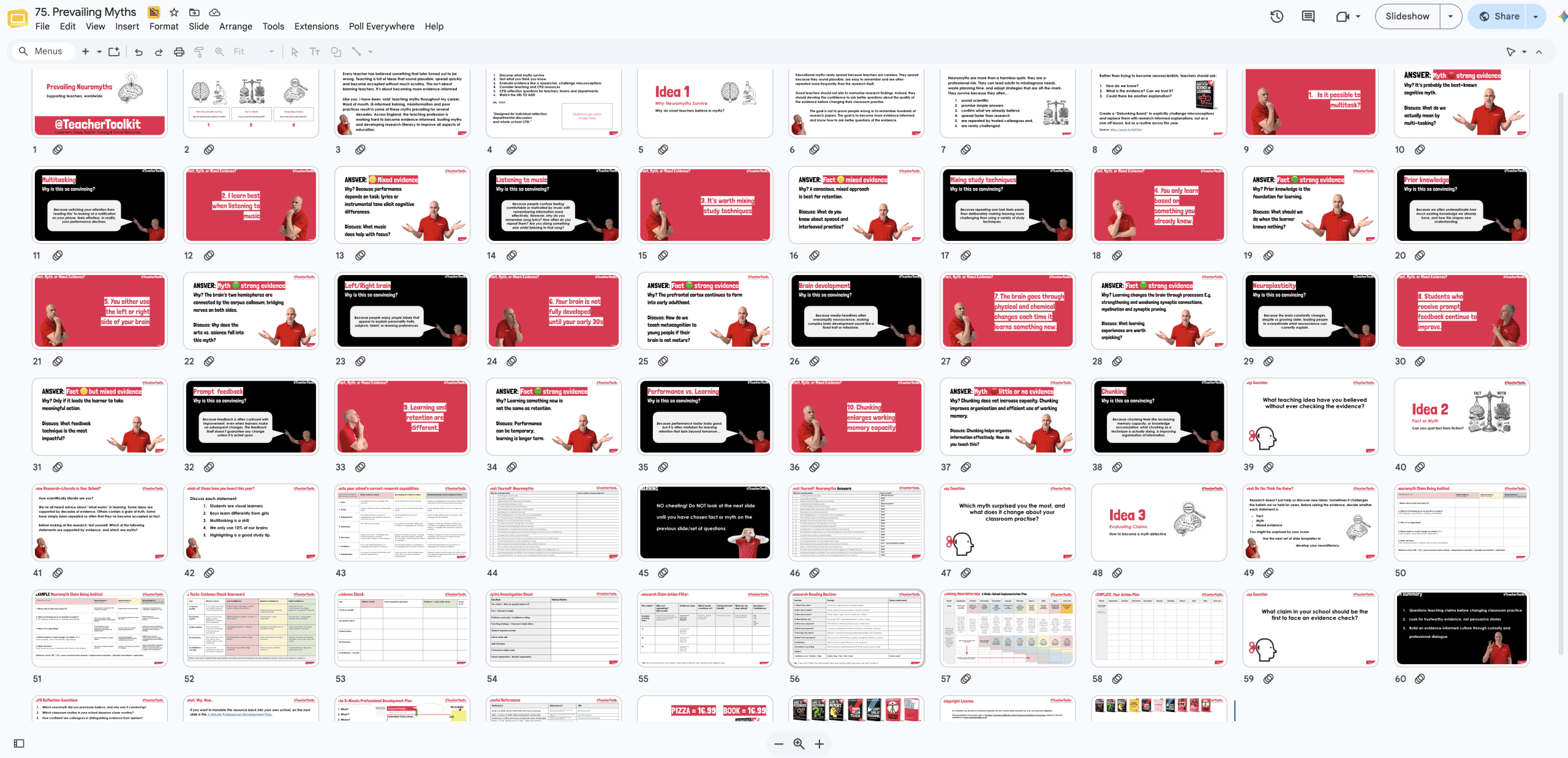
This download includes a 56-page slide deck, and 5 editable templates, including a Fact or Myth? quiz, a neuromyth audit template, classroom and parent communication resources, and a whole-school implementation plan, research references, reflection questions and a 9-minute walkthrough video.
This resource is perfect for:
- Classroom teachers who want to become more evidence-informed
- CPD leaders who wish to disseminate for whole-school training
- School and college leaders reviewing teaching and learning policies
- Teacher supporting students with effective study habits and scientific literacy
- This resource is exclusive to The Toolkit members.
- Access to all membership materials provides 5+ years of teacher training value!
Description
Every teacher has encountered these phrases: 1) “Students are left-brained or right-brained.” 2) “Highlighting is an effective revision strategy.” 3) “Students learn best when teaching matches their preferred learning style.”
Some educational claims are supported by decades of robust research. Others persist because they sound plausible, are repeated frequently, or have simply become embedded in school culture.
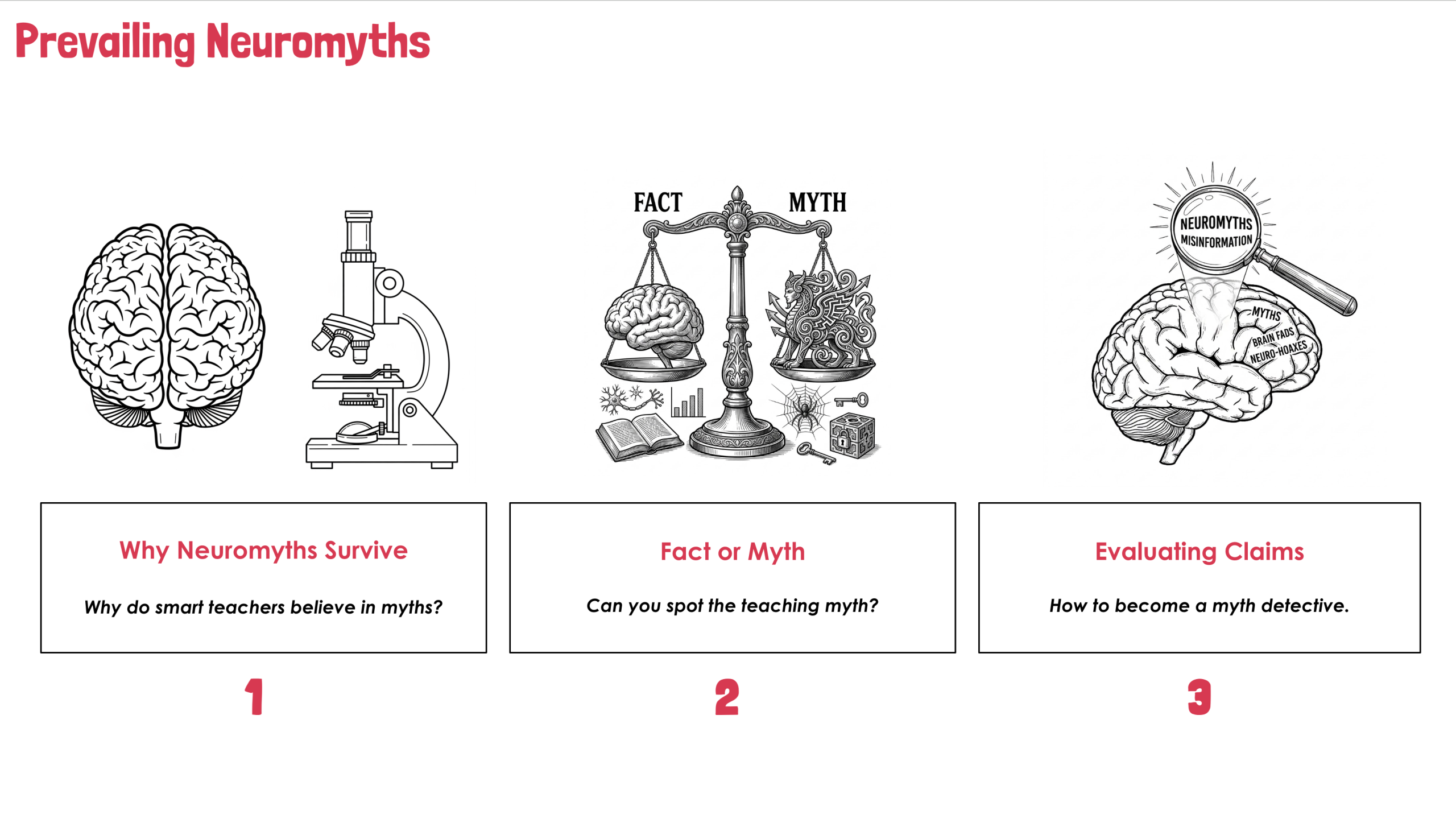
Inspired by Chapter 3 of The TeacherToolkit Guide to the Science of Learning, this month’s membership resource helps teachers separate evidence from assumption by exploring 22 common education myths about teaching, learning and the brain. Rather than simply telling you whether a statement is fact or myth, this resource develops scientific literacy and encourages teachers to evaluate educational claims with greater confidence.
Inside this resource
You will find a Fact or Myth? quiz to challenge yourself, staff, students or parents with evidence-informed statements before revealing the available research. Ideal for CPD, tutor time, assemblies and study skills sessions. The resource also offers a practical framework that helps teachers evaluate any educational claim by examining where it came from, the strength of the evidence, why it is appealing and whether it should influence classroom practice.
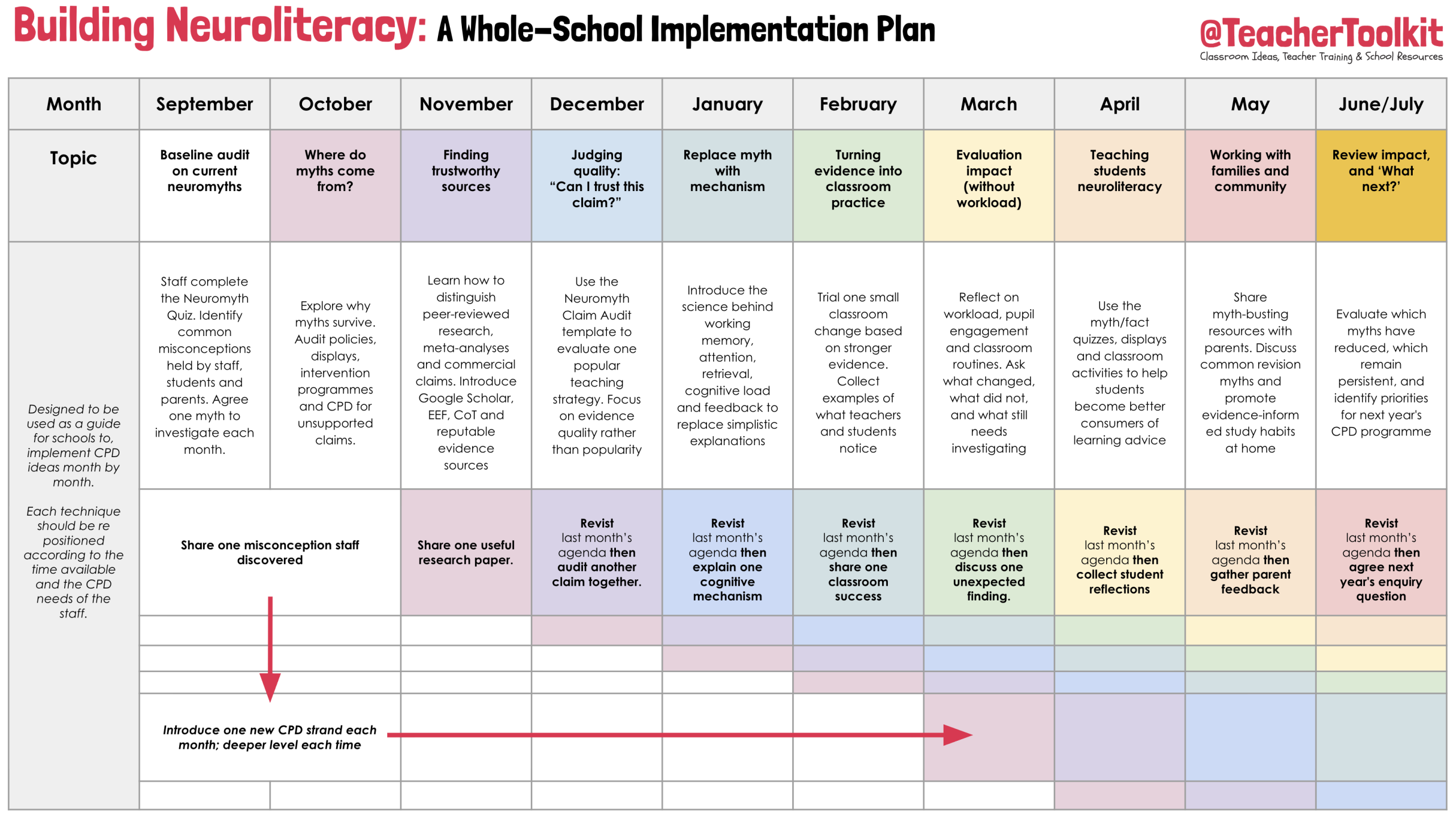
Editable templates, discussion activities and materials are included that help schools build scientific literacy with students, colleagues and families, plus a year-long implementation plan to supports schools in embedding evidence-informed professional development, helping staff move from myth to method through structured enquiry and reflection.
At the heart of this resource is one simple principle: Don’t ask whether an idea is popular. Ask whether the evidence supports it.
Whether you are an early career teacher, middle leader, senior leader, teacher educator or CPD lead, this resource will help you build a culture of curiosity, critical thinking and evidence-informed professional practice.
Only logged in customers who have purchased this product may leave a review.


Reviews
There are no reviews yet.