


Managing Attention Span
Original price was: £5.£3Current price is: £3.
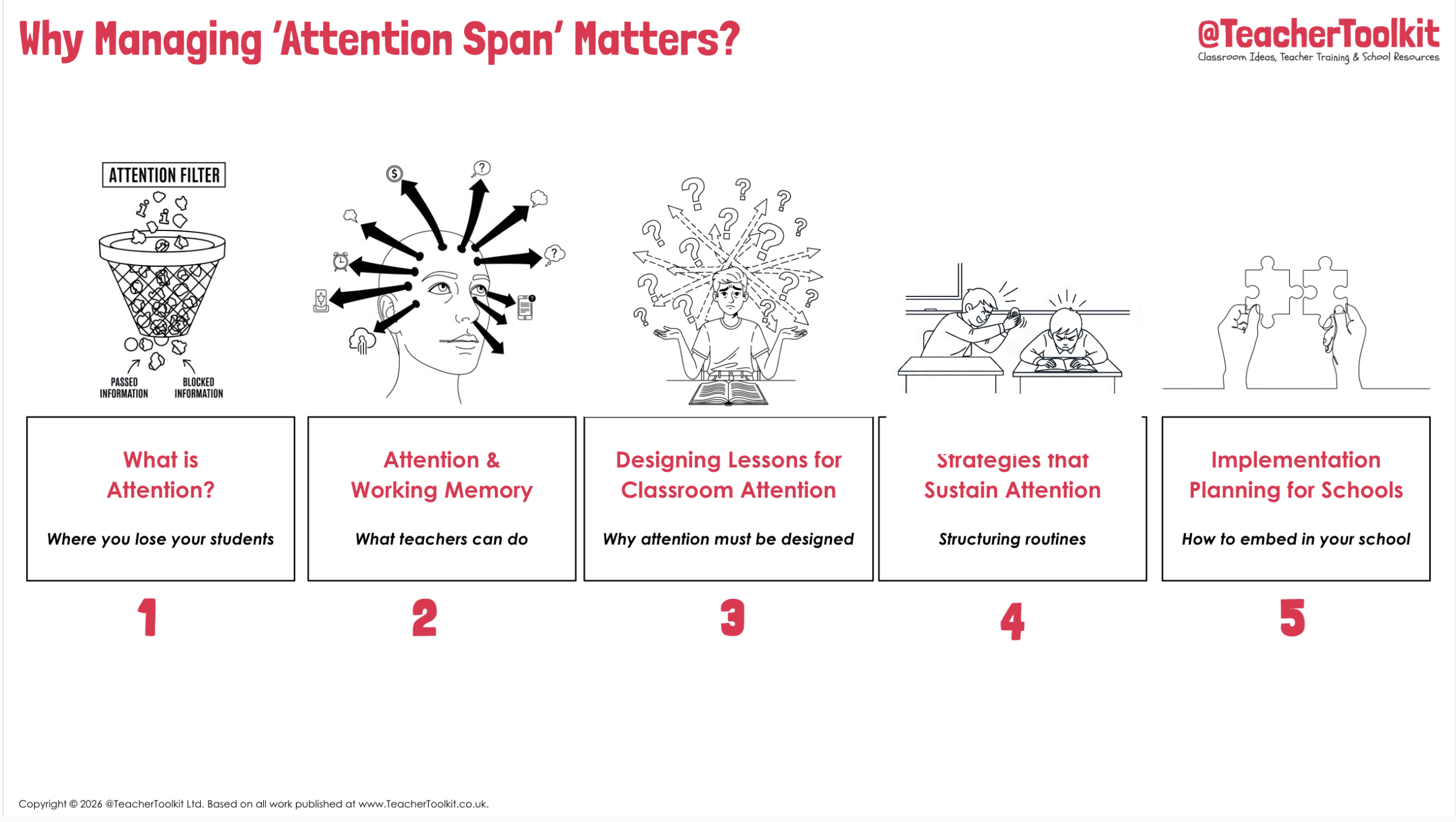
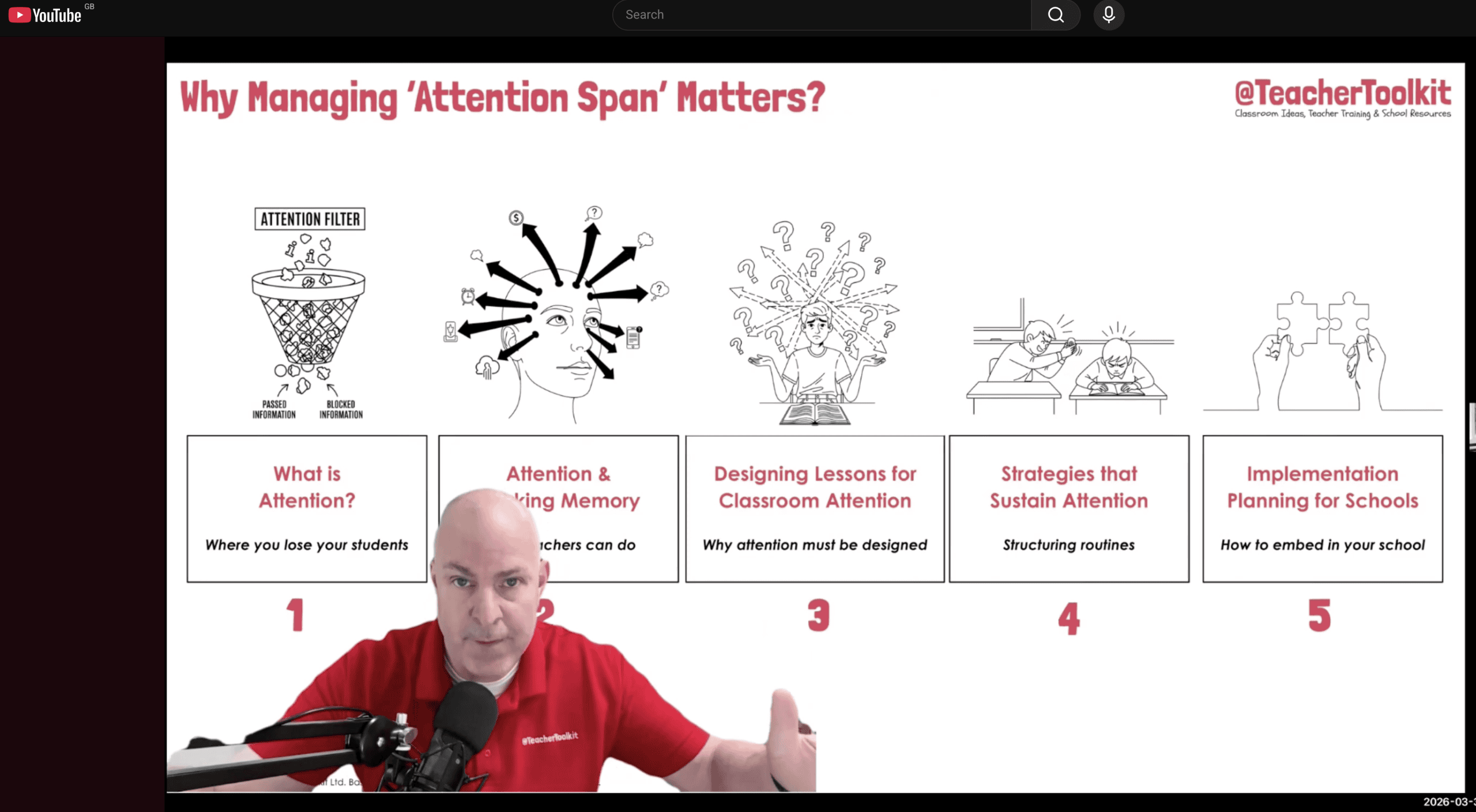
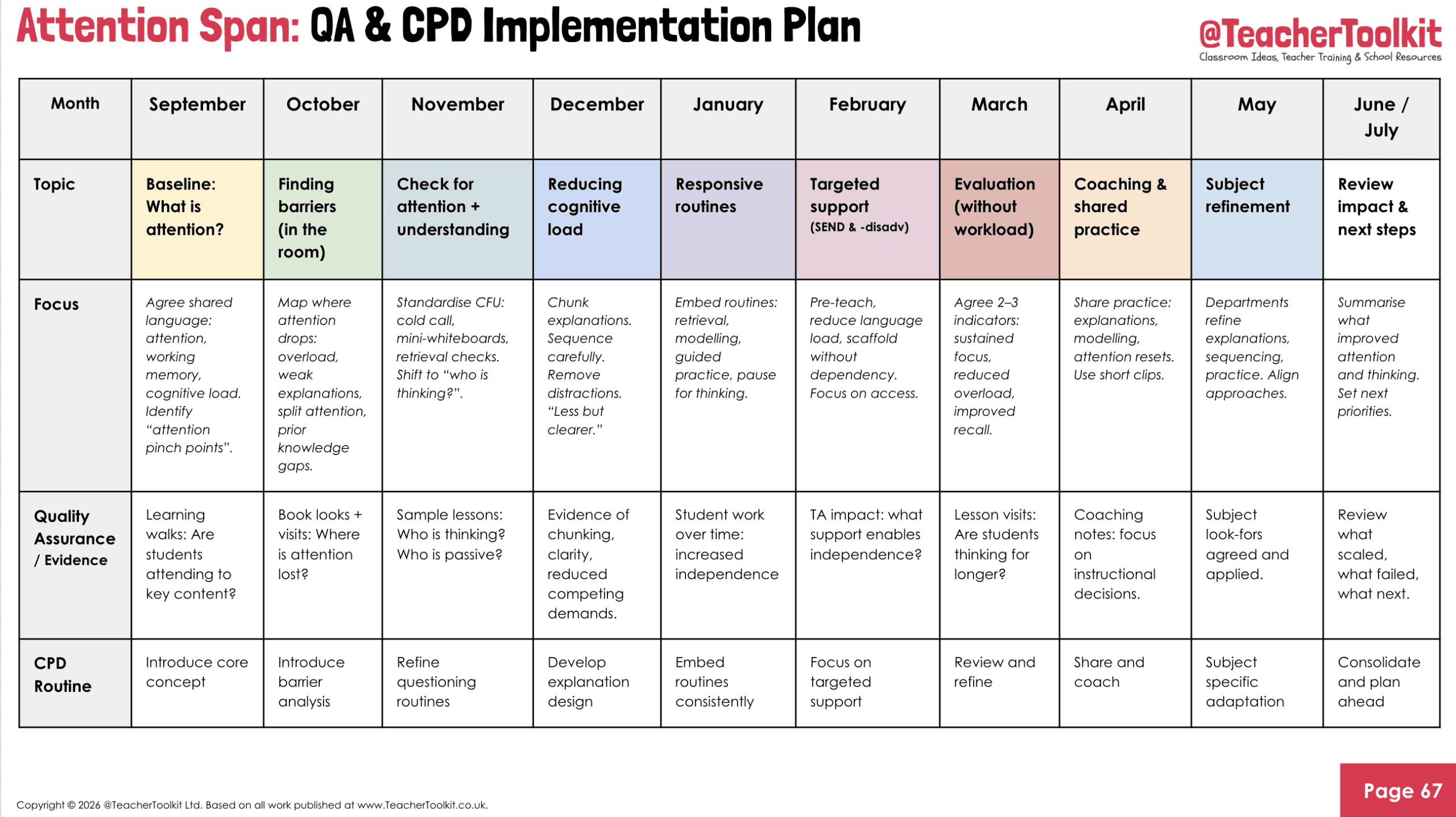
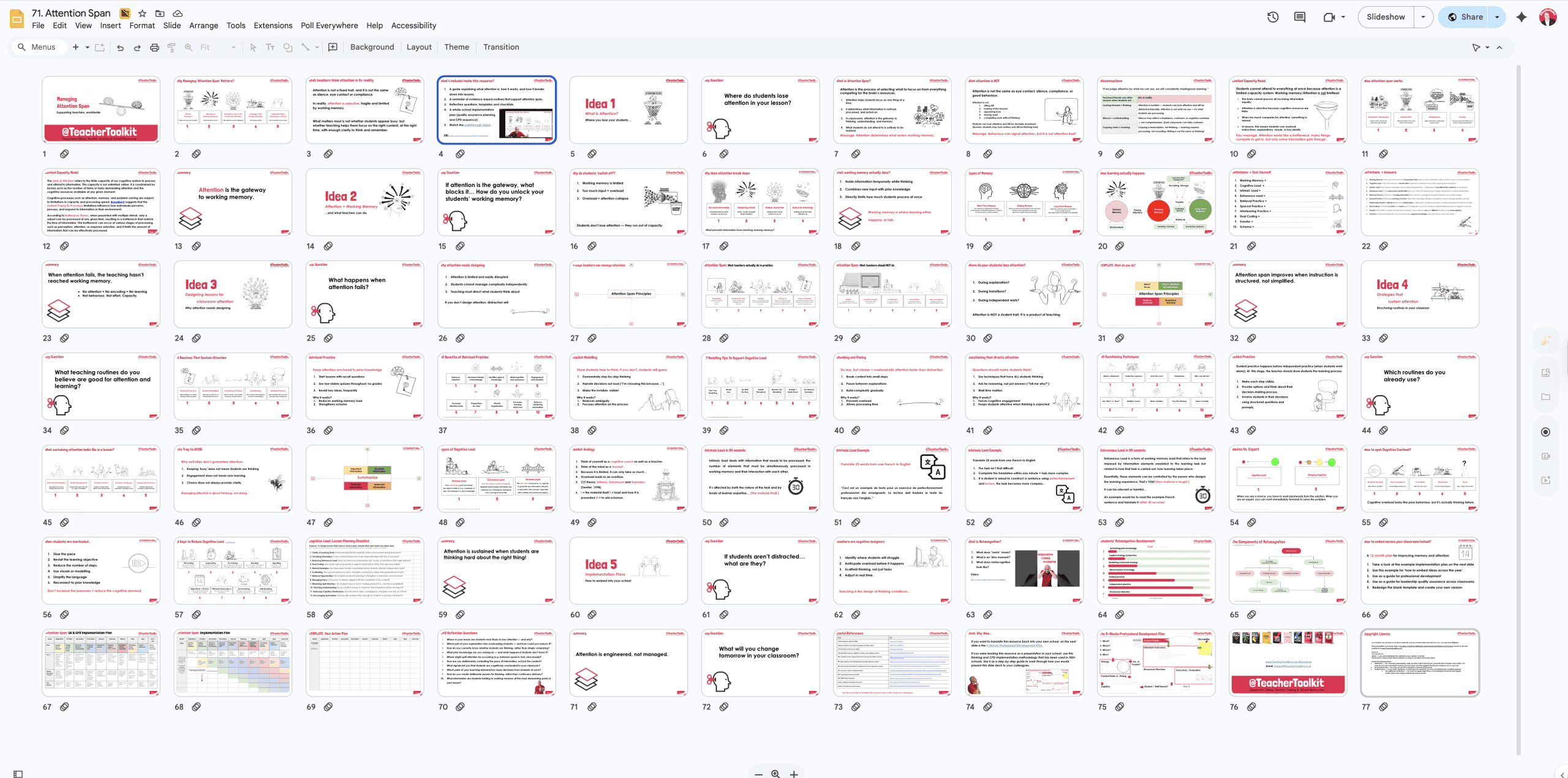
This resource helps teachers understand what attention span really is, what it is not, and why it matters for learning. This download includes a 77-page slide deck, practical reflection questions, templates and checklists, a whole-school implementation calendar, and an 11-minute video walkthrough showing how attention connects to working memory, cognitive load, lesson design, classroom routines and professional development.
This resource is perfect for:
- Classroom teachers who want to understand why students lose attention
- Ideal for teaching and learning leaders
- CPD leads planning training around attention, working memory and cognitive load
- School leaders looking to build shared language and consistent classroom practice
- This resource is exclusive to The Toolkit members.
- Access to all membership materials provides 5+ years of teacher training value!
Description
In this resource, we unpick what attention span actually means in the classroom when viewed through the lens of learning, not behaviour. Attention is not the same as silence, eye contact, compliance or busy-looking pupils. Instead, it is the selective, fragile process through which students focus on one thing at a time, filter competing distractions, and bring information into working memory. When attention fails, learning is far less likely to happen.
This month’s slide deck focuses on helping teachers understand why students ‘switch off’ and what can be done about it. You’ll find practical guidance on how attention works, why working memory becomes overloaded, and how classroom teaching can reduce cognitive demand without reducing challenge. The emphasis is on designing lessons that direct students’ thinking: breaking explanations into smaller steps, making success criteria explicit, reducing competing stimuli, checking for understanding more precisely, and using routines that keep attention anchored to the right content.
For teachers, this resource offers a set of evidence-informed approaches that can be used immediately: retrieval practice, explicit modelling, chunking and pacing, questioning, guided practice, and practical ways to spot and respond to cognitive overload. For school leaders, the focus is on coherence: building shared language around attention, working memory and cognitive load; using quality assurance to look for thinking rather than compliance; and embedding this work through a whole-school CPD and implementation plan.
Developed by Ross Morrison McGill (@TeacherToolkit), this resource helps schools move beyond generic advice about engagement and behaviour, and instead build a sharper understanding of how teaching secures attention, supports memory, and improves learning over time
Only logged in customers who have purchased this product may leave a review.


Reviews
There are no reviews yet.